The Sea Ranch: Architecture, Environment, and Idealism



Category: The Full Collection
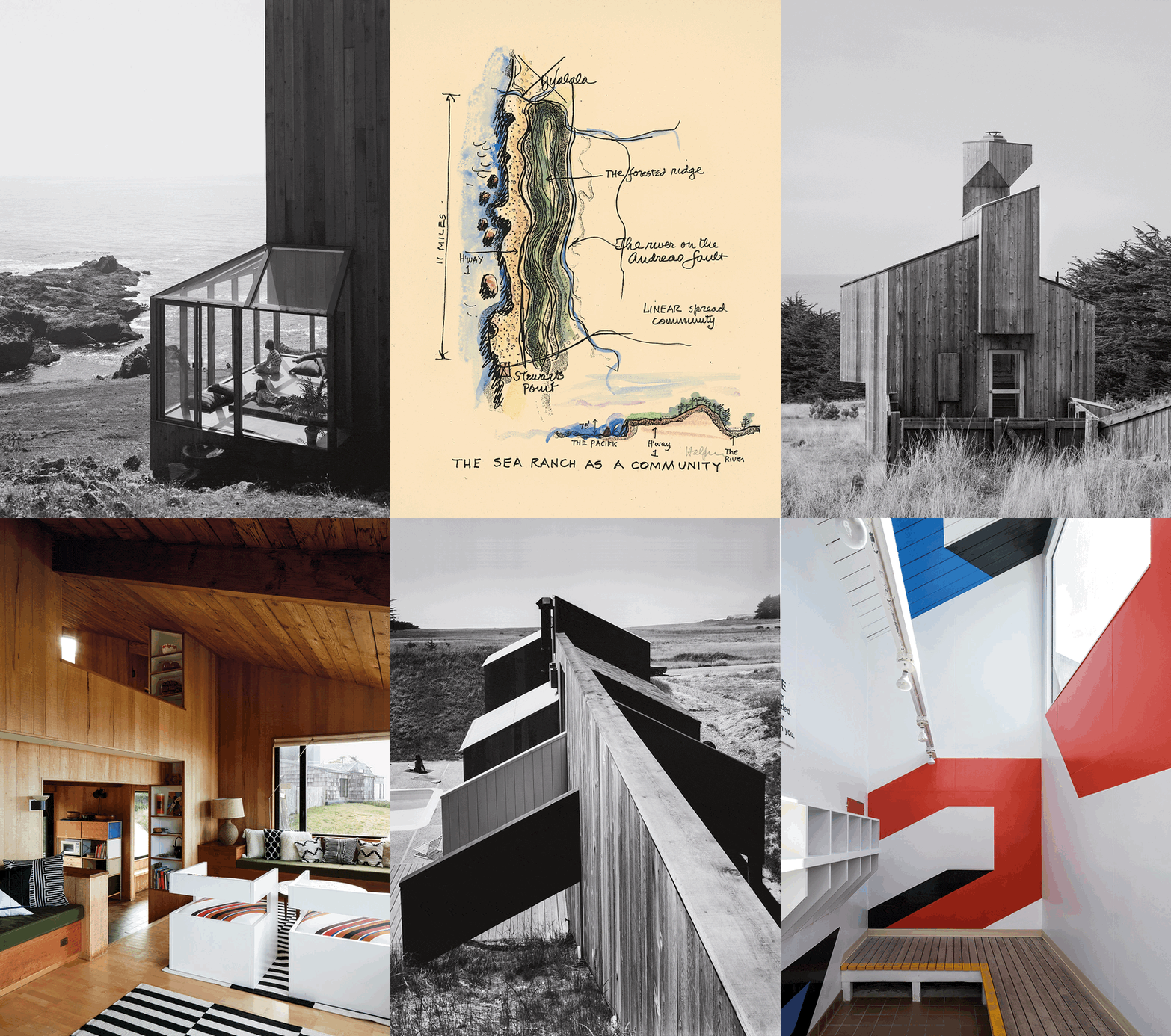
In 1965, on ten miles of fog-battered Northern California coastline, a group of architects made a compact with the land. No manicured lawns. No imposed order. Buildings that hunkered into the headlands, clad in weathering wood, oriented toward the wind rather than against it. The Sea Ranch was an argument for how to live.
Lawrence Halprin master-planned the community with the conviction that the landscape itself was the architecture. Charles Moore, Donlyn Lyndon, William Turnbull, and Joseph Esherick designed the early structures. Barbara Stauffacher Solomon painted the interiors in bold supergraphics — a shock of color inside all that restraint. The result was something genuinely without precedent: a West Coast vernacular modernism that treated land stewardship and design ambition as the same project.
Halprin's sketches, archival and contemporary photographs, drawings, and essays place The Sea Ranch within the broader history of California architecture. The voices of the designers themselves run throughout.
Winner of the Society of Architectural Historians' Philip Johnson Exhibition Catalogue Award.


